


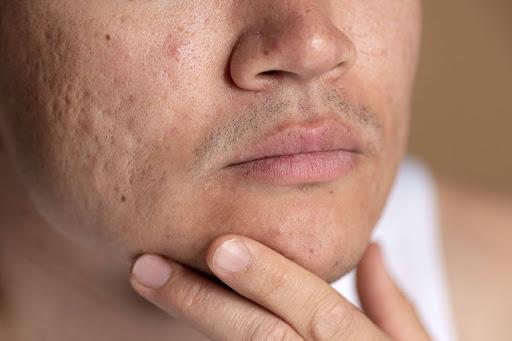
Among all acne scar types, ice pick scars are often considered one of the most difficult to treat. These scars are narrow on the surface but extend deeply into the skin, creating tiny, puncture-like depressions.
Many patients struggle with acne scars for years because the scar type is not correctly identified or the treatment approach does not adequately address the underlying tissue damage.
Contents
- 0.1 What Are Ice Pick Scars?
- 0.2 Why Are Ice Pick Scars Difficult to Treat?
- 0.3 Can Ice Pick Scars Be Treated?
- 0.4 Ice Pick Scar Treatment at Oceania
- 0.5 Why Is Combination Therapy Important?
- 0.6 Acne Scar Treatment at Oceania – Personalized, Medical-Grade, and Patient-Centered
- 0.7 Conclusion
- 1 Frequently Asked Questions
What Are Ice Pick Scars?
Ice pick scars are characterized by:
- Narrow openings.
- Steep scar walls.
- Deep extension into the dermis.
- Common occurrence on the cheeks and temples.
Because of their depth and shape, they are often more challenging to improve than boxcar or rolling scars.
Why Are Ice Pick Scars Difficult to Treat?
Deep Tissue Damage
Inflammatory acne can destroy collagen and supporting tissue, leaving deep channels within the skin.
Extremely Narrow Surface Openings
Their small surface size makes them difficult to target with superficial treatments.
Fibrotic Scar Tissue
Some scars are tethered by fibrotic tissue beneath the skin, making them resistant to single-treatment approaches.
Can Ice Pick Scars Be Treated?
Yes.
However, treatment often requires:
- Accurate scar assessment.
- Personalized treatment planning.
- Combination therapies.
- Multiple treatment stages.
The goal is to improve skin texture and stimulate collagen remodeling.
Ice Pick Scar Treatment at Oceania
Ice pick scars are considered one of the most challenging types of acne scars to treat due to their deep, narrow structure extending into the dermis. At Oceania, we do not apply a one-size-fits-all approach. Instead, each patient receives a highly personalized treatment plan based on scar characteristics, skin quality, and individual healing capacity.
Before treatment, every patient undergoes a comprehensive consultation and assessment by a physician, including:
- Scar type classification: ice pick scars, boxcar scars, rolling scars, or mixed scars.
- Scar depth and degree of fibrosis.
- Overall skin quality and collagen regeneration capacity.
- Previous treatment history.
- Skin sensitivity and preferred downtime.
Based on this assessment, physicians create a customized multi-technology treatment protocol designed to address different aspects of scar formation and skin remodeling.
Fractional CO2 Laser – Skin Resurfacing and Remodeling
Fractional CO2 Laser creates microscopic treatment zones in the skin, helping to:
- Stimulate new collagen production.
- Resurface uneven skin texture.
- Support the gradual improvement of scar depth.
- Promote skin renewal and tissue remodeling.
For ice pick scars, CO2 Laser is often incorporated into a comprehensive treatment plan to address deep and long-standing scar tissue.
RF Microneedles – Targeting Deep Scar Tissue
RF Microneedles combine microneedling with radiofrequency energy to deliver controlled heat into deeper layers of the skin.
This treatment may help:
- Target fibrotic scar tissue.
- Stimulate collagen and elastin production.
- Improve skin firmness and overall skin quality.
- Reduce downtime compared with certain more invasive procedures in appropriate cases.
PRP (Platelet-Rich Plasma) – Supporting Recovery and Regeneration
PRP uses platelet-rich plasma derived from the patient’s own blood and contains growth factors that may support:
- Tissue regeneration.
- Recovery after aesthetic procedures.
- Improvement in overall skin quality.
- Collagen remodeling as part of an acne scar treatment plan.
PRP is often combined with other technologies to optimize recovery and enhance the overall treatment experience.
Why Is Combination Therapy Important?
No single technology can comprehensively address all the mechanisms involved in acne scar formation, especially with deep and complex ice pick scars.
Combining multiple technologies allows physicians to target:
- Scar structure and underlying fibrotic tissue.
- New collagen production.
- Skin quality and elasticity.
- Recovery and healing processes.
Each treatment plan is customized based on:
- Scar type and severity.
- Duration of the scars.
- Individual skin characteristics.
- Treatment goals and desired downtime.
Acne Scar Treatment at Oceania – Personalized, Medical-Grade, and Patient-Centered
At Oceania, acne scar treatment goes beyond performing a single procedure. It is a comprehensive journey built on a closed-loop medical process, from consultation and treatment to post-procedure follow-up and long-term skin management.
What Makes Oceania Different?
✔️ Physicians personally assess each patient and design individualized treatment protocols.
✔️ Multi-technology treatment strategies, combining Fractional CO2 Laser, RF Microneedles, and PRP to optimize treatment outcomes.
✔️ Authentic technologies and medical-grade products, with many devices and materials meeting stringent international standards such as FDA (U.S. Food and Drug Administration) Clearance and CE Marking (European Conformity).
✔️ Closed-loop treatment protocols based on medical standards, ensuring sterilization, patient safety, and quality control throughout every stage of treatment.
✔️ Long-term follow-up and continuous support, allowing physicians to monitor progress and adjust treatment plans when necessary.
Rather than applying a standard protocol to every patient, each treatment plan at Oceania is carefully tailored to improve scar structure, enhance overall skin quality, and provide an optimized, patient-centered treatment experience.
Conclusion
Ice pick scars are among the most challenging acne scars due to their deep and narrow structure.
However, a personalized treatment strategy incorporating CO2 Laser, RF Microneedles, and PRP may help improve skin texture and overall appearance over time.
Consulting a qualified physician is the first step toward determining the most appropriate treatment plan for your acne scars.
Frequently Asked Questions
Can ice pick scars disappear on their own?
No. Acne scars are structural skin changes and usually do not resolve completely without treatment.
Are ice pick scars the hardest scars to treat?
They are generally considered one of the most challenging acne scar types due to their depth and narrow shape.
Can skincare products improve ice pick scars?
Skincare may support skin quality but is usually insufficient to significantly improve deep scar structure.
Is combination therapy necessary?
Many patients benefit from combination approaches that address multiple aspects of scar formation.
How long does it take to see improvement?
Results vary depending on scar severity, skin condition, and the individualized treatment plan.