


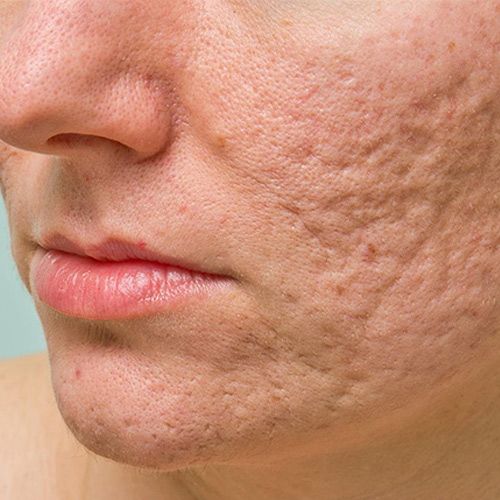
Many individuals dealing with severe facial acne scarring feel self-conscious and helpless after trying numerous home remedies without seeing any skin improvement. Whether relying on expensive topical cosmetics or traditional home remedies, deep-set scars often remain untouched over time. The truth is that distinct scar morphotypes—such as Icepick scars and Boxcar scars—possess completely different depth profiles and fibrotic structures. Understanding scar morphology and applying targeted medical protocols at Oceania Clinic is the ultimate key to determining which scar type is harder to treat and successfully restoring smooth skin.
Contents
- 1 1. Definition and Recognition of Icepick and Boxcar Scars
- 2 2. Causes and Fibrotic Architecture of Icepick and Boxcar Scars
- 3 3. When Do Acne Scars Become Severe or Persistent?
- 4 4. When Should You Seek Acne Scar Treatment?
- 5 5. Specialized Treatment Protocols at Oceania Clinic: Which Scar Is Harder to Treat?
- 6 6. Advanced Equipment and Medical Products at Oceania Clinic
- 7 7. Frequently Asked Questions (FAQ)
- 8 BOOK YOUR CONSULTATION & TREATMENT AT OCEANIA
1. Definition and Recognition of Icepick and Boxcar Scars
Accurately identifying scar morphology is a crucial prerequisite in dermatological medicine for selecting effective treatment modalities:
Boxcar scars may be easier to improve when they are shallow and not strongly tethered. However, deep Boxcar scars with significant fibrosis can also be difficult to treat.
| Feature | Icepick | Boxcar |
| Shape | Narrow and deep | Wider depression |
| Depth | Often deep | Superficial to deep |
| Opening | Small | Wider |
| Main structural concern | Depth and fibrosis | Depression, edges and fibrosis |
| Possible treatment direction | Targeted treatment for deep scars | Resurfacing + scar release when indicated |
| Difficulty | Often challenging when deep | Depends on depth and tethering |
Therefore, the name of the scar alone does not determine treatment difficulty.
2. Causes and Fibrotic Architecture of Icepick and Boxcar Scars
Both scar types originate from severe inflammatory responses triggered by acne vulgaris (nodulocystic acne, pustules), chickenpox, or physical trauma:
- Icepick Scar Architecture: Deep follicular inflammation destroys the supporting collagen column. As healing occurs, vertical fibrotic tracts pull the tissue downward, creating a narrow yet deep vertical “tunnel.”
- Boxcar Scar Architecture: Formed when extensive inflammation destroys broad areas of connective tissue in the dermis. Ruptured fibrotic bands anchor the scar base tightly to underlying structures both vertically and horizontally, establishing a box-like depression with clear margins.
3. When Do Acne Scars Become Severe or Persistent?
While acne scars are not life-threatening, delaying treatment leads to chronic structural skin degeneration:
- Scar Fibrosis: Older scars develop calcified, rigid fibrotic tethers. Over time, these dense fibrotic bands continuously pull the skin surface inward, worsening skin unevenness and sagging.
- Accelerated Aging Impact: As natural aging reduces dermal collagen and elasticity, Icepick and Boxcar scars widen, appearing deeper and more pronounced.
- Psychological Distress: Untreated facial scarring often causes low self-esteem and social anxiety in personal and professional interactions.
4. When Should You Seek Acne Scar Treatment?
Waiting years for scars to “settle” before seeking treatment is a common misconception. The “Golden Window” for treating Icepick and Boxcar scars is within 1 to 3 months after active acne lesions heal.
During this critical timeframe, fibrotic bands are not fully calcified, dermal tissues remain pliable, and collagen remodeling potential is at its peak. Early intervention can shorten overall treatment duration by 50%–70% and achieve scar filling rates up to 80%–90%.
5. Specialized Treatment Protocols at Oceania Clinic: Which Scar Is Harder to Treat?
Dermatologically speaking, Icepick scars are often harder to treat due to their extreme depth, whereas Boxcar scars require extensive subcision to release widespread tethering. Therefore, Oceania Clinic utilizes custom combination therapies tailored to each type:
Why Do Icepick Scars Require TCA CROSS Combined with Fractional CO2 Laser?
Standard superficial resurfacing cannot reach the deep base of narrow Icepick scars.
- TCA CROSS (Chemical Reconstruction of Skin Scars): High-concentration Trichloroacetic Acid (70%–100%) is precisely applied to the deep base of individual scars. This induces controlled focal necrosis, triggering rapid bottom-up collagen synthesis to elevate the scar floor.
- Fractional CO2 Laser: Emitting 10,600nm micro-beams to smooth sharp scar shoulders, promote epidermal renewal, and blend skin texture.
Why Do Boxcar Scars Require Subcision Combined with Microneedling RF?
Boxcar scar floors are tethered by horizontal and vertical fibrotic bands that must be mechanically released before volume restoration can occur.
- Deep Subcision: Using specialized medical needles, dermatologists puncture the skin to sever fibrous tethers anchoring the scar to sub-dermal tissues. Once released, the depressed scar floor immediately lifts naturally.
- Microneedling RF (Radiofrequency): Immediately following subcision, insulated micro-needles deliver controlled RF heat deep into the dermis. This energy stimulates fibroblasts to produce abundant new collagen and elastin, filling the newly liberated dermal space.
6. Advanced Equipment and Medical Products at Oceania Clinic
Oceania Clinic invests in state-of-the-art dermatological equipment to guarantee clinical safety and optimal outcomes:
- FDA/CE-Certified Devices: Advanced Fractional CO2 Lasers and Microneedling RF platforms allow precise micro-adjustments of needle depth and energy delivery.
- Personalized Multi-Layer Protocols: Patients undergo 3D skin analysis with specialist dermatologists to map scar distribution and customize synergistic procedures.
- Medical-Grade Safety Standards: Strict sterile protocols minimize treatment discomfort and prevent post-inflammatory hyperpigmentation (PIH).
7. Frequently Asked Questions (FAQ)
Q1: How many sessions are required to fill Icepick and Boxcar scars?
Answer: A typical protocol consists of 3 to 6 sessions depending on scar age and skin response. Significant improvement (30%–50%) is often visible after the very first Subcision / TCA CROSS treatment.
Q2: Are Subcision and TCA CROSS procedures painful?
Answer: Patients receive topical medical anesthesia for 45–60 minutes prior to the procedure, ensuring a gentle and comfortable experience.
Q3: Will filled acne scars relapse or sink again over time?
Answer: No. Once fibrous tethers are completely severed and newly generated collagen fills the defect, scar restoration results at Oceania Clinic are permanent.
BOOK YOUR CONSULTATION & TREATMENT AT OCEANIA
Do not let acne scars hold back your confidence! Contact Oceania Clinic today for a personalized scar treatment plan guided by expert dermatologists.
- Official Websites: oceaniaspa.vn | clinic-hanoi.oceaniaspa.vn
- Southern Branch: clinic-hochiminh.oceaniaspa.vn
- Branch 2 Address (HCMC): SH06 – Aqua 3, Vinhomes Golden River, 2 Ton Duc Thang Street, Ben Nghe Ward, District 1, HCMC, Vietnam
- Consultation & Booking Hotline: (+84) 36 637 0508