


Contents
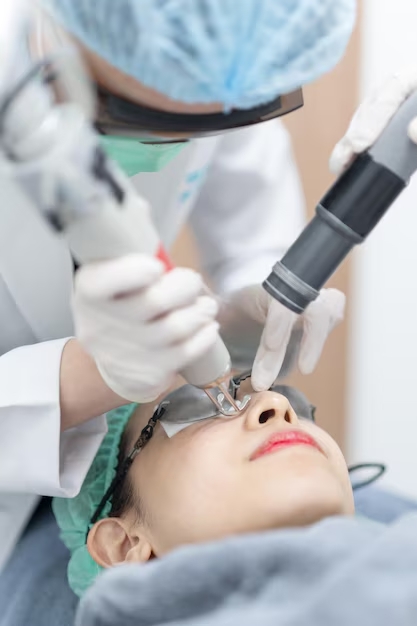
Why Is Post-Laser Skincare Important?
Laser is widely used to address pigmentation concerns. Depending on the skin condition, technologies such as Pico Laser and Ndyag Laser can deliver controlled energy to pigmentation, helping break pigment into smaller particles that are gradually cleared by the body’s natural processes.
However, skin does not immediately return to its final appearance after Laser treatment.
During the early recovery period, the skin may become more sensitive. Excessive sun exposure or inappropriate skincare can contribute to irritation and post-inflammatory hyperpigmentation (PIH).
For this reason, post-Laser care is an important part of pigmentation management.
1. How Does Skin Recover After Laser?
After Laser treatment, the skin begins its natural recovery process.
Stage 1: Increased sensitivity
The skin may appear slightly red or feel warm or sensitive. The response varies depending on the Laser, treatment settings and individual skin condition.
Stage 2: Barrier recovery
As the initial response settles, the skin begins restoring its protective barrier and renewing surface cells.
Stage 3: Pigment clearance
Pigment affected by Laser does not necessarily disappear immediately. The body needs time to process and clear the fragmented pigment, so improvement may continue after treatment.
This is why aggressive skincare or additional treatments should not be introduced too quickly.
2. 5 POST-LASER RULES TO FOLLOW
Rule 1: Take Sun Protection Seriously
Sun protection is one of the most important parts of post-Laser care.
UV exposure can stimulate melanin production and make pigmentation more difficult to control.
After treatment:
- Minimize direct sun exposure.
- Use sunscreen according to your doctor’s instructions.
- Wear protective clothing, hats or masks when appropriate.
- Avoid prolonged outdoor exposure during strong sunlight.
Laser may target pigmentation, but consistent sun protection helps protect the treatment result.
Rule 2: Focus on Recovery Instead of Over-Treating the Skin
Some patients want to use multiple brightening products immediately after Laser because they want pigmentation to fade faster.
This can be counterproductive.
During recovery, keep the routine simple and follow professional recommendations. Avoid introducing potentially irritating products or strong exfoliation before the skin has stabilized.
Oceania offers Laser Doctor, a post-Laser care product designed to support skin recovery and regeneration after Laser and advanced aesthetic procedures.
The more sensitive the skin, the more controlled the skincare routine should be.
Rule 3: Do Not Pick, Scrub or Over-Exfoliate
After Laser, the skin may feel dry or show mild surface changes.
Avoid:
- Picking peeling skin.
- Aggressive rubbing.
- Frequent exfoliation.
- Strong facial cleansing devices.
- At-home peeling without professional guidance.
Excessive mechanical irritation may prolong recovery.
Allow the skin to recover naturally according to your doctor’s instructions.
Rule 4: Support Hydration and the Skin Barrier
A recovering skin barrier benefits from appropriate hydration and gentle care.
Depending on the individual’s condition, the doctor may recommend specific recovery products or supportive treatments.
Oceania also provides post-technology skincare solutions designed to support recovery rather than focusing only on pigmentation reduction.
Rule 5: Follow Your Doctor’s Follow-Up Plan
Melasma should not be treated according to the principle of “more Laser is always better.”
After each session, the skin should be assessed before deciding whether another treatment is appropriate.
This is especially important for skin prone to PIH.
Oceania’s pigmentation approach emphasizes individualized treatment based on skin condition rather than applying identical Laser settings to every patient.
3. How Can You Reduce the Risk of PIH After Laser?
PIH refers to increased pigmentation that develops following inflammation or skin injury.
After Laser, the goal is therefore not only to address existing pigmentation but also to minimize unnecessary irritation.
Remember:
UV exposure → pigmentation stimulation
Irritation → increased PIH risk
Incorrect aftercare → prolonged recovery
Rather than searching for the strongest brightening product, focus on:
Sun protection + recovery + professional aftercare.
4. Why Does Oceania Look Beyond Laser Alone?
A good pigmentation plan should not begin with:
“Which Laser is the strongest?”
It should begin with:
“What type of pigmentation do I have, and is Laser appropriate for my skin?”
Oceania emphasizes professional assessment before selecting a treatment technology.
Systems such as MARK-VU are presented by Oceania as tools that analyze multiple skin characteristics and help compare skin condition before and after treatment.
The treatment plan can then take into account:
- Type of pigmentation.
- Severity.
- Skin sensitivity.
- Previous treatments.
- Recovery capacity.
- PIH risk.
This individualized approach is particularly relevant for Asian skin, which can be more prone to pigmentation changes after irritation.
5. OCEANIA – PROFESSIONAL TECHNOLOGY & PERSONALIZED CARE
Doctor-Led Assessment
Oceania follows an approach based on assessment – technology selection – treatment – monitoring – aftercare, rather than simply performing Laser on request.
Professional Laser Technology
Oceania provides Laser technologies including Pico Laser and Ndyag Laser for pigmentation concerns.
For example, PICO MAX is presented by Oceania as having FDA, KFDA, CE and ISO certifications and is used for pigmentation concerns such as melasma, freckles and brown spots.
Oceania’s treatment devices are selected according to FDA standards, helping provide an additional level of reassurance for clients.
A Closed Treatment Process
From consultation and treatment to post-Laser guidance, clients receive a coordinated treatment journey.
Oceania also provides English–Vietnamese support for international clients during consultation and aftercare.
Focus on Both Results and Safety
Oceania does not promote the idea that pigmentation should always be treated with maximum energy.
The objective is to find an appropriate level of intervention while supporting recovery and minimizing unwanted pigmentation responses such as PIH.
FAQ – POST-LASER MELASMA CARE
Can I go into the sun after Laser treatment?
Direct sun exposure should be minimized. Follow your doctor’s recommendations regarding sunscreen and physical protection.
Should I use more brightening products after Laser?
Do not increase active skincare on your own while the skin is still recovering. Prioritize recovery and follow professional instructions.
Why can skin look darker after Laser?
Some patients may develop PIH, particularly when the skin becomes irritated or is exposed to UV radiation during the sensitive recovery period.
When can I have another Laser session?
There is no single interval that works for everyone. The appropriate schedule depends on the Laser, treatment settings and individual recovery.
Does post-Laser care affect melasma results?
Yes. Sun protection, skin recovery and following aftercare instructions can help maintain treatment results and reduce pigmentation triggers.
CONCLUSION
Post-Laser skincare is just as important as choosing the right technology.
Laser can target pigmentation, while the recovery period gives the skin time to repair, stabilize and rebuild its protective barrier.
Remember these five rules:
- Protect your skin from the sun.
2. Prioritize recovery.
3. Avoid picking, rubbing and excessive exfoliation.
4. Maintain hydration and barrier support.
5. Follow your doctor’s treatment and follow-up plan.
If you are undergoing melasma treatment or are concerned about PIH after Laser, consult a professional before changing your skincare routine or adding additional pigmentation treatments.
Learn more about Oceania:
Oceania Clinic Ho Chi Minh – Pigmentation Treatment
Oceania Clinic Ho Chi Minh City: SH06 – Aqua 3, Vinhomes Golden River, 2 Ton Duc Thang Street, Ho Chi Minh City.
Hotline: 086 609 0369.