


Contents
- 1
- 2 What Is PRP and Why Is It Used for Skin Rejuvenation?
- 3 How Does PRP Work?
- 4 What Can PRP Do for the Skin?
- 5 Who May Be Suitable for PRP Skin Rejuvenation?
- 6 Is PRP Suitable for Sensitive Skin?
- 7 Can PRP Be Combined with Other Treatments?
- 8 PRP Skin Rejuvenation at Oceania – Personalized for Every Patient
- 9 Oceania’s USP – Why Choose Oceania for PRP?
- 10 Is PRP a Permanent Anti-Aging Treatment?
- 11 Does PRP Hurt?
- 12 Is PRP Safe?
- 13 Conclusion
- 14 FAQ – Frequently Asked Questions
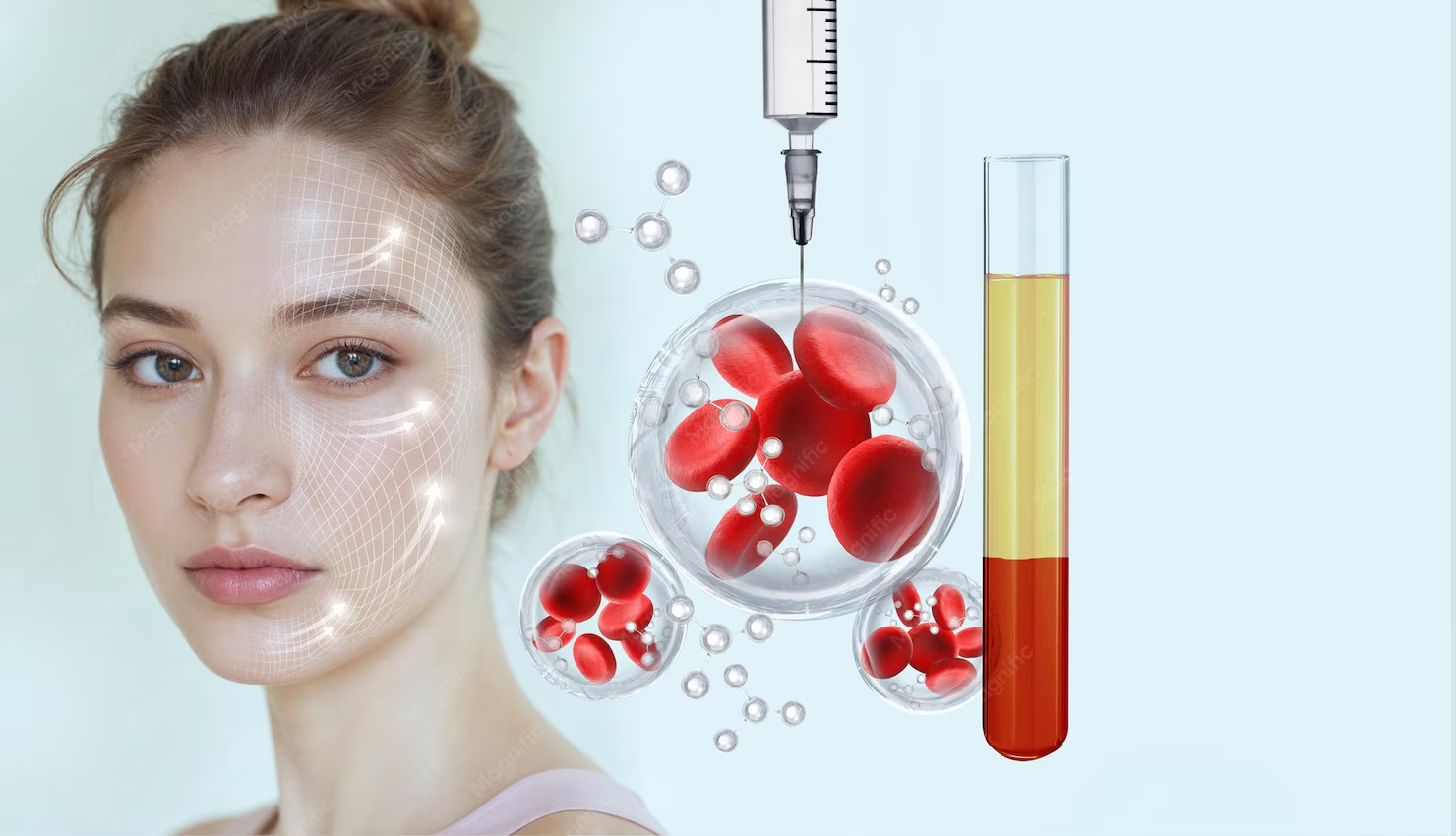
What Is PRP and Why Is It Used for Skin Rejuvenation?
PRP stands for Platelet-Rich Plasma.
It is a treatment that uses a patient’s own blood, which is processed to obtain a platelet-rich plasma component before being used in the treatment area according to medical indications.
Platelets are not only involved in blood clotting. They also contain growth factors involved in biological processes related to tissue repair and regeneration.
For this reason, PRP has been used in various medical fields, including aesthetic protocols designed to support skin quality and skin rejuvenation.
However, PRP should not be considered a universal “anti-aging injection” that produces identical results for everyone.
Treatment outcomes depend on skin condition, the quality of the blood sample, processing technique, treatment method and appropriate medical indications.
How Does PRP Work?
A PRP procedure typically begins with collecting a small amount of the patient’s own blood.
The blood sample is then processed using an appropriate method to separate its components and obtain platelet-rich plasma.
Platelets contain various growth factors associated with:
- Tissue repair.
- Tissue regeneration.
- Extracellular matrix support.
- Skin cell activity.
- Natural wound-healing processes.
When used appropriately, PRP can become part of a skin rejuvenation protocol designed to support overall skin quality.
What Can PRP Do for the Skin?
Depending on the patient’s condition and treatment indication, PRP may be used to support:
Overall Skin Quality
PRP can be incorporated into protocols designed to promote healthier, smoother and fresher-looking skin.
Tissue Regeneration
Growth factors released from platelets may participate in tissue repair and regeneration processes.
Signs of Skin Aging
PRP may be considered as part of protocols targeting:
- Reduced skin firmness.
- Uneven skin texture.
- Fine lines.
- Dull-looking skin.
- Early signs of aging.
Skin Recovery
In selected cases, PRP may be combined with other procedures to support the skin recovery process.
Who May Be Suitable for PRP Skin Rejuvenation?
A physician may consider PRP for patients who want to:
- Improve overall skin quality.
- Support skin rejuvenation.
- Improve dull-looking skin.
- Reduce the appearance of fine lines.
- Improve skin texture.
- Support recovery after selected procedures.
- Use a treatment material derived from their own body.
However, PRP is not suitable for everyone.
A physician should assess the patient’s health status, skin condition, medical history, current medications and treatment goals before making a recommendation.
Is PRP Suitable for Sensitive Skin?
Many patients are interested in PRP because it uses autologous blood, meaning the patient’s own blood.
However, using an autologous material does not automatically mean that PRP is appropriate for every patient.
The procedure still requires:
- Appropriate medical indication.
- Infection-control measures.
- Safe blood collection.
- Proper sample processing.
- Pre-treatment assessment.
- Post-treatment monitoring.
This is why PRP should be performed in a setting with appropriate medical protocols and qualified professionals.
Can PRP Be Combined with Other Treatments?
Depending on the patient’s skin condition, a physician may consider combining PRP with other treatments.
For example:
PRP + Laser
May be considered in selected protocols designed to improve skin quality or support recovery.
PRP + Microneedling
May be incorporated into treatment plans targeting skin texture and regenerative processes.
PRP + Other Rejuvenation Technologies
Depending on the patient’s goals, physicians may develop a multi-technology treatment plan.
The key point is that more treatments do not automatically mean better results.
Combination treatments should be designed according to the patient’s skin condition and individual goals.
PRP Skin Rejuvenation at Oceania – Personalized for Every Patient
At Oceania, PRP is not treated as a one-size-fits-all procedure.
The physician directly assesses:
- Skin condition.
- Degree of skin aging.
- Treatment area.
- Previous treatments.
- General health.
- Current medications or skincare products.
- Aesthetic goals.
The physician can then determine whether PRP is appropriate and develop an individualized treatment plan.
Oceania’s USP – Why Choose Oceania for PRP?
Physician-Led Assessment
Patients are assessed before PRP rather than simply purchasing a treatment package based on a desired outcome.
Personalized Treatment Plans
Every patient’s skin and treatment goals are different. Oceania selects treatment methods and plans according to individual needs.
Medical-Standard Infection Control
Because PRP involves collecting and processing autologous blood, infection control and procedural hygiene are particularly important.
Oceania emphasizes a controlled treatment process, appropriate equipment hygiene and procedural protocols designed to minimize risks associated with invasive procedures.
Professional Technology and Equipment
Oceania uses professional equipment and products with an emphasis on traceability. Certain technologies at the clinic may meet international standards such as FDA (United States) or CE (European Union) depending on the specific device.
Post-Treatment Monitoring
Patients receive aftercare guidance and follow-up based on their individual response.
International Patient Support
Oceania provides English-speaking support for:
- Expats living in Vietnam.
- International professionals.
- Foreign patients.
- International residents in Ho Chi Minh City.
Is PRP a Permanent Anti-Aging Treatment?
No.
PRP may support improvements in skin quality, but it cannot stop the natural aging process.
Results depend on factors such as:
- Age.
- Skin condition.
- Lifestyle.
- Skincare routine.
- Sun protection.
- Overall health.
- Individual response.
Therefore, a realistic goal of PRP is to support and maintain skin quality, rather than permanently reverse the aging process.
Does PRP Hurt?
The level of discomfort depends on the technique used and each patient’s pain tolerance.
Before the procedure, appropriate comfort measures may be used to help the patient feel more comfortable.
After treatment, some patients may experience:
- Mild redness.
- Mild swelling.
- Temporary tightness or discomfort.
These reactions should be assessed according to each patient’s individual condition.
Is PRP Safe?
Because PRP uses autologous blood, it avoids the use of blood-derived material from another person.
However, PRP is still a medical procedure, so it should not be considered completely risk-free.
Safety depends on:
- Appropriate indication.
- Proper technique.
- Infection control.
- Correct sample processing.
- Qualified professionals.
- Appropriate aftercare.
This is another reason patients should avoid PRP procedures at facilities that do not provide appropriate medical standards.
Conclusion
PRP – Platelet-Rich Plasma – is an autologous treatment approach used in multiple medical applications, including protocols designed to support skin rejuvenation and overall skin quality.
PRP may be considered for patients seeking:
Better skin quality → tissue support → recovery → natural-looking rejuvenation.
However, results vary between individuals. Proper assessment and medical indication are essential before treatment.
At Oceania, physicians directly assess each patient, develop personalized treatment plans and emphasize medical-standard procedures, infection control and appropriate aftercare.
If you are searching for PRP Treatment Vietnam, PRP Skin Rejuvenation or PRP for Expats in Ho Chi Minh City, start with a professional consultation to determine whether PRP is appropriate for your skin and treatment goals.
FAQ – Frequently Asked Questions
What is PRP?
PRP stands for Platelet-Rich Plasma. It is prepared from a patient’s own blood and processed to obtain a plasma component with a higher concentration of platelets.
Can PRP rejuvenate the skin?
PRP may be incorporated into treatment protocols designed to support skin quality, tissue repair and selected signs of skin aging. Results vary between patients.
Does PRP use my own blood?
Yes. PRP uses the patient’s own blood, which is then processed to obtain platelet-rich plasma.
How often should PRP be performed?
There is no universal schedule. The number of sessions and interval between treatments depend on skin condition and the treatment plan developed by the physician.
Can foreigners receive PRP at Oceania?
Yes. Oceania provides English-speaking support and welcomes international patients living and working in Vietnam.